

Sciatica & leg pain
Pain that travels down the leg can be unsettling, and it often comes with a lot of worry about what it means.
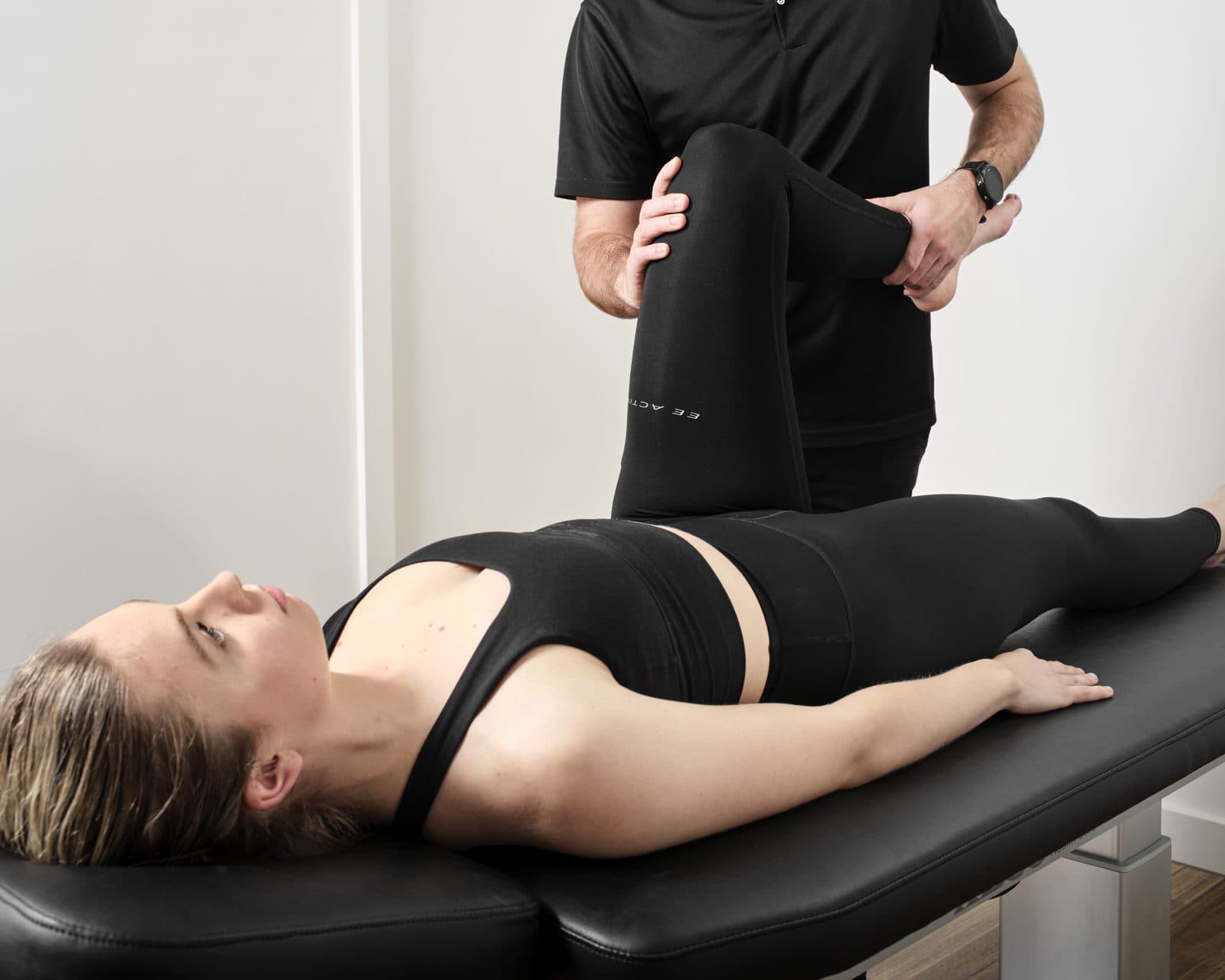
Sciatica describes pain that travels from the lower back or buttock down the leg, often with tingling or numbness. It can be alarming, but for many people it settles well with the right approach. We assess what is driving it and reframe a lot of the fear that tends to come with it.
What it can feel like
- Pain travelling from the back or buttock into the leg
- Tingling, numbness, or pins and needles down the leg
- Discomfort that worsens with prolonged sitting
- A sense of weakness or heaviness in the leg
Common contributing factors
- Irritation of the lower back or its nerve roots
- Long periods of sitting with little movement
- A specific bend or lift that overloaded the area
- Reduced movement and strength through the hips and back
How we help
A careful assessment to understand the source
Hands-on treatment to reduce irritation and restore movement
Reassurance and clear information to reduce the worry
A graded plan to get you confidently moving again
Our perspective
What a scan does and does not tell you
If you have had a scan that found a disc bulge, it is easy to assume the worst. Here is some context that helps: around a third of people in their twenties have disc bulges on imaging and feel no pain at all. By the age of fifty that figure is closer to sixty per cent, and it keeps climbing as we get older. A finding on a scan does not mean you are damaged or heading for surgery. What matters is how your back and leg actually move and respond, not the picture alone.
The reassuring part is that the large majority of sciatica settles with patient, conservative care. It is rarely quick, and we will be honest with you about that, but the goal is to calm the irritated nerve, restore how you move, and rebuild your confidence so the worry lifts along with the pain.
Common questions about sciatica & leg pain
Can osteopathy help with sciatica?+
Yes, for most people. The large majority of sciatica settles with patient, conservative care: calming the irritated nerve, restoring movement, and gradually rebuilding strength and confidence. We also spend time taking the fear out of it, because sciatica tends to come with a lot of worry.
Is sciatica serious?+
Usually not, although it can be very painful. The exceptions needing urgent medical care are loss of bladder or bowel control, numbness in the saddle area, or rapidly progressing leg weakness. If any of those appear, go to an emergency department. Everything else we can assess and manage with you.
Should I get an MRI for sciatica?+
Not usually as a first step. Disc bulges show up on scans in around a third of pain-free people in their twenties, and more with age, so imaging often adds worry without changing the plan. We will tell you honestly if your presentation is one where a scan genuinely matters.
How long does sciatica take to settle?+
We will be honest: rarely quickly. Most sciatica improves over weeks to a few months with the right approach. The encouraging part is that the trajectory is usually steadily upward once the irritation starts to calm, and we track that with you openly.
Related reading
Sciatica just means the nerve is irritated. It does not tell you why. There are three main causes, and each one needs a different approach, which is why working out which one you have is the most important step.
Pain down the leg is unsettling, and it usually comes with a lot of worry. Here is how we approach sciatica, and why most of it settles better than people fear.
One of the most common questions we hear. Scans have their place, but for most everyday back and neck pain they are not the first thing you need. Here is an honest look at why.
Dealing with sciatica & leg pain?
Book your 60-minute first appointment and we will help you get to the cause, or call the clinic for a chat. Real diagnosis, hands-on treatment, and a plan to follow. All in your first visit.
Same-day appointments often available. Online booking, instant confirmation. HICAPS rebates on the spot.